
Why Do I Keep Getting the Same Injury Over and Over Again?
 Posted on
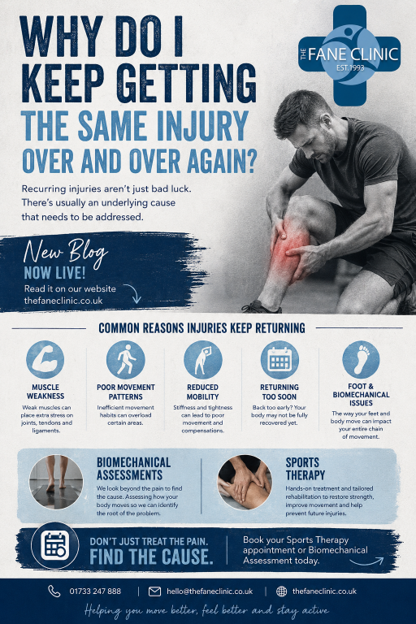
Have you ever felt like you’ve finally recovered from an injury, only for the same pain to return a few weeks or months later?
Whether it’s recurring heel pain, ankle sprains, shin splints, knee pain, Achilles issues or lower back discomfort, repeated injuries can be frustrating and often leave people wondering why the problem never seems to fully go away.
The truth is that recurring injuries are rarely just bad luck. In many cases, the pain you’re experiencing is a symptom of an underlying issue that has never been properly addressed.
Treating the Pain vs Finding the Cause
When an injury occurs, most people focus on reducing pain and getting back to their normal activities as quickly as possible. This might involve rest, ice, pain relief medication or simply waiting for symptoms to settle.
While this can help in the short term, it doesn’t always address the reason the injury occurred in the first place.
Imagine a warning light appearing on your car dashboard. Covering the light doesn’t fix the problem it simply hides the symptom. The same principle applies to many musculoskeletal injuries.
Without identifying the underlying cause, there is a greater chance that the injury will return.
Common Reasons Injuries Keep Returning
Muscle Weakness
Weakness in key muscle groups can place excessive stress on joints, tendons, and ligaments.
For example, weakness around the hips and glutes can contribute to recurring knee pain, while weakness in the calf muscles may increase the risk of Achilles tendon problems.
Poor Movement Patterns
Over time, our bodies develop movement habits. Some of these are efficient, while others place unnecessary strain on certain areas.
Small changes in the way you walk, run, squat or move can significantly increase the risk of repetitive injuries.
Reduced Mobility and Flexibility
Stiff joints and tight muscles can alter how the body absorbs forces during daily activities and exercise.
This often leads to compensation elsewhere in the body, increasing the likelihood of pain and injury.
Returning Too Soon
Many people return to sport, exercise or work activities before their tissues have fully recovered.
Although pain may have settled, strength, endurance and stability may not have returned to pre-injury levels.
Foot and Biomechanical Issues
The feet provide the foundation for the entire body. Problems such as excessive pronation, reduced ankle mobility, flat feet or altered gait patterns can contribute to recurring pain in the feet, ankles, knees, hips and even the lower back.
This is why assessing movement as a whole is often just as important as treating the painful area itself.
Why a Biomechanical Assessment Can Help
At The Fane Clinic, we frequently see patients who have been struggling with the same injury for months or even years.
A biomechanical assessment looks beyond the site of pain and examines how your body moves during walking, standing and functional activities.
During the assessment we may evaluate:
- Foot posture and alignment
- Walking and gait patterns
- Joint mobility
- Muscle strength
- Balance and stability
- Movement mechanics
- Areas of compensation throughout the body
By identifying contributing factors, we can often uncover why symptoms continue to return.
How Sports Therapy Can Help Break the Cycle
Sports Therapy is not just for athletes.
Whether you’re a runner, gym-goer, golfer, office worker or simply enjoy staying active, Sports Therapy focuses on identifying the root cause of pain and creating a tailored rehabilitation plan.
Treatment may include:
- Strengthening exercises
- Mobility work
- Rehabilitation programmes
- Soft tissue therapy
- Sports massage
- Exercise prescription
- Injury prevention advice
- Return-to-activity planning
Rather than simply treating symptoms, the aim is to improve the body’s ability to tolerate activity and reduce the likelihood of future injuries.
Don’t Wait for the Pain to Return Again
If you’re repeatedly experiencing the same injury, it may be a sign that the underlying cause has not yet been identified.
Addressing the root of the problem now could help prevent months of frustration, time away from activities you enjoy and unnecessary discomfort.
At The Fane Clinic, our Sports Therapy and Biomechanical Assessment services are designed to help uncover the reason behind recurring injuries and create a personalised plan to keep you moving confidently.
Ready to Get to the Bottom of Your Injury?
If you’re tired of the same pain coming back time and time again, our team is here to help.
Book a Sports Therapy appointment or Biomechanical Assessment today and take the first step towards understanding the cause of your injury… not just the symptoms.
📍 The Fane Clinic, Peterborough
📞 Contact our team today to arrange your appointment.