
Can Tight Hamstrings Cause Back Pain? Understanding the Link Between Tight Muscles and Injury
 Posted on
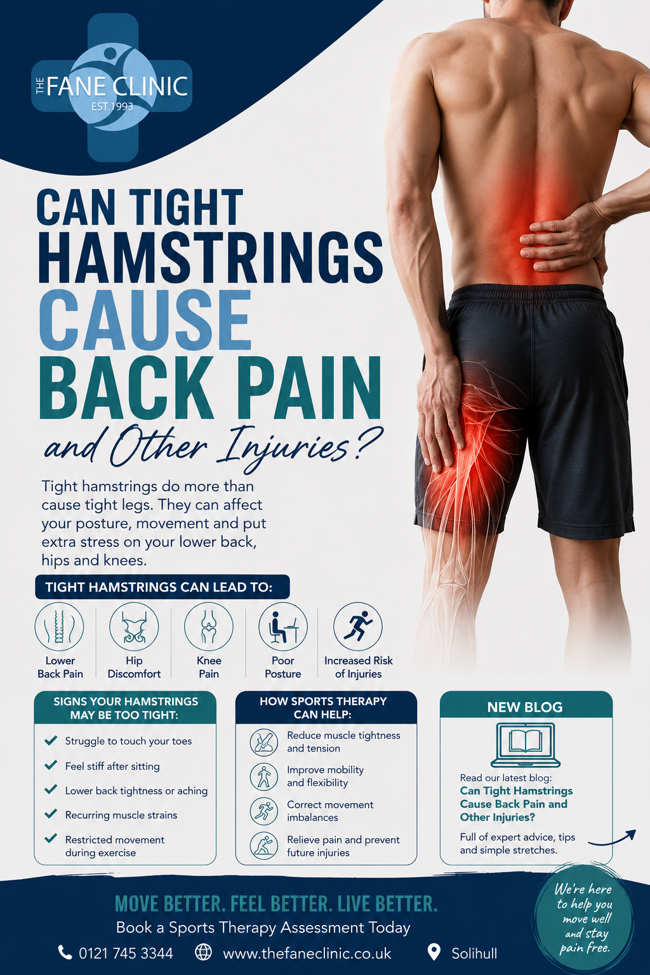
Many people stretch their back repeatedly when pain appears, but the real problem may actually be coming from somewhere else entirely the hamstrings.
At The Fane Clinic, we regularly see patients with lower back pain, hip discomfort, knee issues, and recurring injuries that are linked to tight hamstrings and poor mobility.
Whether you sit at a desk all day, train regularly at the gym, run frequently, or simply feel stiff and tight, restricted hamstrings can have a major impact on how your body moves.
What Are the Hamstrings?
The hamstrings are a group of muscles located at the back of the thigh. They help with:
- Bending the knee
- Extending the hip
- Walking and running
- Posture and pelvic control
When the hamstrings become tight or shortened, they can affect movement patterns throughout the body.
How Tight Hamstrings Can Cause Back Pain
One of the most common effects of tight hamstrings is increased tension through the pelvis and lower back.
The hamstrings attach to the pelvis, so when they are excessively tight, they can pull the pelvis into an altered position. This changes how the spine moves and increases stress on the lower back muscles and joints.
This may lead to:
- Lower back stiffness
- Aching after sitting
- Pain when bending forward
- Reduced flexibility
- Muscle tension and spasms
Many people find that despite stretching their back or resting, the pain keeps returning because the underlying hamstring tightness has not been addressed.
Other Injuries Linked to Tight Hamstrings
Hip Pain
Tight hamstrings can restrict hip movement and alter posture, placing extra strain on the hip joints and surrounding muscles.
This may contribute to:
- Hip tightness
- Glute pain
- Reduced mobility during exercise
- Discomfort during walking or running
Knee Pain
Restricted hamstrings can affect knee mechanics and increase tension around the back of the knee.
This may contribute to:
- Runner’s knee
- Tendon irritation
- Reduced movement efficiency
- Tightness when squatting or lunging
Poor Posture
Hamstring tightness is extremely common in people who spend long hours sitting. Over time, this can contribute to:
- Rounded posture
- Pelvic imbalance
- Reduced spinal mobility
- General stiffness throughout the body
Increased Risk of Muscle Strains
Tight muscles are often less able to tolerate sudden force or explosive movement.
This is why athletes and runners with poor hamstring flexibility may experience:
- Hamstring strains
- Calf injuries
- Reduced athletic performance
- Recurring muscle tightness
Why Sitting Can Make Hamstrings Tight
Modern lifestyles are one of the biggest causes of poor hamstring mobility.
Long periods of sitting can keep the hamstrings in a shortened position for hours at a time. Without regular movement and mobility work, the muscles gradually become tighter and less flexible.
This is especially common in:
- Office workers
- Drivers
- Students
- People working from home
Signs Your Hamstrings May Be Contributing to Pain
You may have tight hamstrings if you:
- Struggle to touch your toes
- Feel stiff after sitting
- Experience lower back tightness
- Get recurring muscle strains
- Feel restricted during exercise
- Notice pulling behind the thighs when bending forward
How Sports Therapy Can Help
At The Fane Clinic, sports therapy focuses on identifying the root cause of pain and improving movement patterns not simply treating symptoms.
Treatment may include:
- Sports massage
- Soft tissue therapy
- Mobility exercises
- Stretching programmes
- Strengthening exercises
- Postural assessment
- Injury rehabilitation
Improving hamstring mobility can often reduce stress on the lower back, improve movement quality, and help prevent recurring injuries.
Don’t Ignore Tightness and Stiffness
Tight hamstrings are often dismissed as “normal,” especially in people with desk jobs or active lifestyles. However, long-term tightness can contribute to pain, reduced mobility, and recurring injuries throughout the body.
Addressing the problem early can improve flexibility, movement, posture, and overall comfort.
Book a Sports Therapy Assessment
If you are struggling with back pain, stiffness, or recurring injuries, sports therapy may help identify the underlying cause.
Contact The Fane Clinic to book an assessment and start moving more comfortably.